
Detention Claim Evidence Checklist for Trucking
Detention recovery usually fails before the invoice is sent. The missing piece is often a notice deadline, a readable time, a facility check-in record, or the written term that explains when paid time begins.
Quick answer
Quick answer
Preserve the governing detention terms, timestamped arrival and release, written broker notice, facility and driver evidence, signed POD or BOL times, approval thread, and final invoice line in one claim record.
- Read the notice and free-time terms before pickup.
- Capture time from more than one defensible source.
- Track the claim until approved, denied, or paid.
Start with the written terms
Extract the free-time allowance, notice window, hourly rate, cap, required evidence, billing process, and exclusions from the rate confirmation or governing agreement. Do not assume one broker's detention rules apply to another.
Create the event timeline
Record appointment, arrival, check-in, dock time if known, loading or unloading completion, paperwork release, and departure. Preserve the observation source for each time instead of replacing conflicts with a guessed value.
- Appointment time
- Arrival and check-in
- Dock or door assignment
- Release and departure
- Source for every timestamp
Send notice inside the required window
Written notice should identify the load, facility, appointment, arrival, current delay, and requested next step. Store the sent time, recipients, and any response with the claim.
Assemble the evidence packet
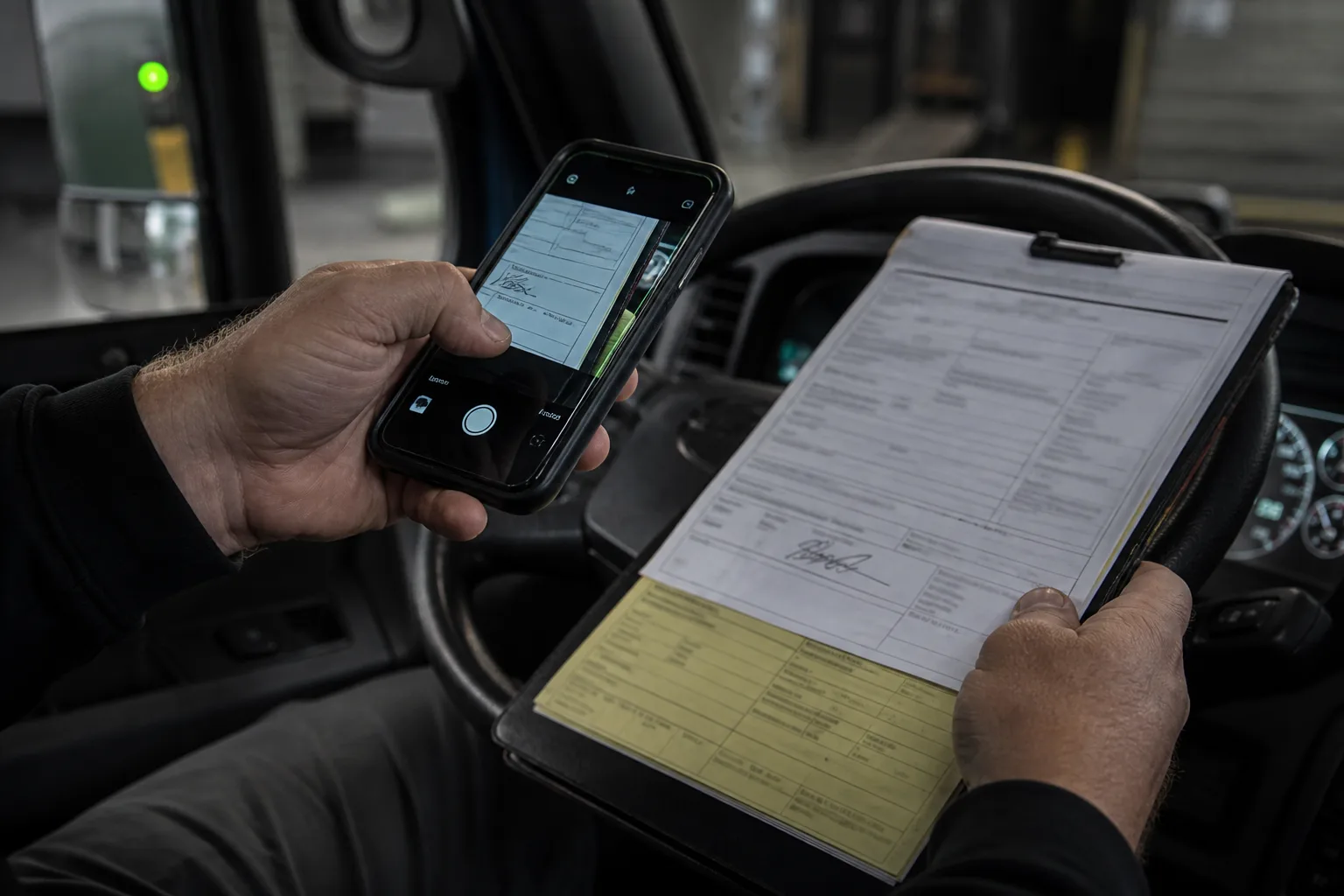
Attach the RateCon, location or check-in evidence, BOL or POD with readable times, driver note, facility communication, and written broker approval. Keep edits and resubmissions visible.
Follow the claim through payment
A submitted claim is still open. Give it a status, owner, follow-up date, amount requested, amount approved, denial reason, and payment reference so it does not disappear from the load closeout queue.